
Forfatter: James Hinchcliffe
Omega-3 and Biological Aging: New Evidence on Longevity and Cellular Health
2025.2.18
Omega-3 fatty acids—long valued for their cardiovascular and anti-inflammatory benefits—are also becoming a key player in the science of longevity.
The question of how fast we age biologically—rather than just chronologically—has been a growing focus in scientific research. While the number of years we have lived is easy to measure, the actual pace of aging at the cellular level can vary significantly from person to person. Lifestyle factors such as diet, exercise, and nutrient intake play a crucial role in this process, and recent advances in DNA methylation (DNAm) clocks have provided a way to quantify these effects. A large clinical study has now provided compelling evidence that omega-3 supplementation, vitamin D, and regular exercise can slow the progression of biological ageing. Over three years, more than 2,000 older adults were monitored to assess whether these interventions could influence four key DNA methylation clocks (PhenoAge, GrimAge, GrimAge2 and DunedinPACE), which serve as biomarkers for aging at the molecular level, over 3 years.
You cand read more about the study here
Slowing the Clock: Omega-3’s Distinct Role
Among the findings, omega-3 supplementation stood out for its measurable impact on biological ageing. Individuals taking omega-3 alone showed notable reductions in PhenoAge, GrimAge2, and DunedinPACE—three of the measured epigenetic markers associated with aging-related health risks. The effect was further amplified when combined with vitamin D and exercise, with the combined intervention reducing biological aging by an estimated 2.9–3.8 months over three years. Beyond its influence on aging markers, omega-3 supplementation was also linked to a 13% reduction in infections and a 10% decrease in falls, reinforcing its broader role in supporting resilience and overall health. Interestingly, those with lower baseline omega-3 levels experienced the most pronounced improvements, pointing to the potential for targeted nutritional strategies based on individual needs.
Shifting Perspectives on Nutrition and Aging
The notion that diet can influence aging is not new, but studies like this provide tangible, clinical evidence that specific nutrients actively modulate the aging process at a fundamental, genetic level. While research into biological aging is still evolving, the findings add to a growing body of evidence suggesting that omega-3 intake is not just beneficial but potentially essential in maintaining long-term health. With an aging global population increasingly focused on preventive health measures, the role of marine-derived omega-3s in slowing biological aging may soon become as widely recognized as their benefits for heart and brain health.


New Research Highlights the Importance of Density-Dependent Factors in Fisheries Management: MIDs analysis
2025.1.15
Fisheries management relies heavily on the concept of maximum sustainable yield (MSY), a principle that has been at the forefront of global and European Union policies for decades. Under the EU’s Common Fisheries Policy, maintaining fishing catches at or below MSY levels has been a cornerstone of sustainable fisheries management. A critical component of this approach is FMSY—the level of fishing mortality that achieves the maximum sustainable yield over the long term.
Recent studies, however, highlight the need for a paradigm shift in how FMSY is calculated and implemented. Traditionally, FMSY estimates assume that fish growth and natural mortality remain constant, with density-dependent effects confined to the early stages of fish life (e.g., recruitment). But this simplification excludes the variability in growth, natural mortality (M), and maturity that occurs as fish populations respond to environmental conditions and food availability which can also be linked to density. New research, published in the ICES Journal of Marine Science, challenges this conventional approach and underscores the significant impact of density dependence on FMSY and MSY estimates.
You can find the recent paper here
Key Findings from the Research
The research explored how accounting for density dependence in fish growth and natural mortality can affect fishing mortality reference points. It evaluated the effects of density-dependent growth and natural mortality on FMSY using age-structured models, estimated FMSY with simpler surplus-production models that incorporate density-dependent dynamics, and compared these results with those from traditional models assuming constant growth and M.
The findings show that incorporating density-dependent factors leads to higher FMSY estimates compared to conventional models. In many cases, MSY values also increased when density dependence was included, though the changes were less pronounced than for FMSY. Surplus-production models that account for density dependence produced estimates of FMSY closer to the “true” value than age-based predictions that assumed constant growth and M. These results suggest that overlooking density-dependent processes in fisheries models may result in overly conservative quotas, potentially limiting sustainable fishing opportunities.
Implications for Fisheries Management
The implications of these findings are significant for fisheries management. By including density-dependent growth and natural mortality, managers can align quotas more closely with biological and environmental realities, adopt adaptable strategies that reflect changes in fish growth and survival, and address systematic biases in current FMSY calculations. This could lead to healthier fish stocks and ecosystems over time. However, adopting these advanced methods is not without challenges. Estimating density-dependent effects introduces more complexity and uncertainty into stock assessments. Higher FMSY values could increase fishing pressure, risking overfishing if models are not carefully calibrated. Additionally, significant changes in data collection, modeling, and policy frameworks would be required to implement these methods effectively. The authors of the research recommend a cautious approach, supported by robust data collection and management strategy evaluations. These evaluations are essential to test the robustness of new methods under various scenarios and mitigate risks of unsustainable fishing practices.
EU requests establishment of arbitration tribunal over the UK’s prohibition of fishing of Sandeel
2024.10.25
The EU has requested the establishment of an arbitration tribunal under the dispute settlement mechanism of the EU–UK Trade and Cooperation Agreement (TCA) regarding the United Kingdom’s decision to prohibit sandeel fishing. The tribunal would assess the compatibility of this measure with the TCA.
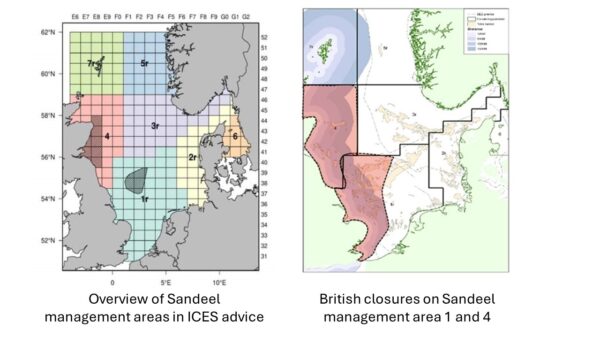
Since 26 March 2024, this prohibition applies to fishing in English waters of the North Sea and all Scottish waters, restricting EU vessels from accessing the sandeel fishery. The EU has questioned the alignment of this ban with the TCA and, in April 2024, initiated consultations with the UK to seek a mutually acceptable resolution. With consultations concluding without an agreement, the EU remains open to one, and the next step in the dispute settlement process is the establishment of an arbitration tribunal.
When managing shared resources, the EU and UK are expected to make non-discriminatory, proportionate decisions based on the best available scientific evidence. Fishing opportunities for sandeel are established based on scientific advice from the International Council for the Exploration of the Sea, which supports sustainable stock management. The EU is committed to promoting environmental, social, and economic sustainability, acting to protect and restore marine ecosystems under the common fisheries policy, the EU Biodiversity Strategy for 2030, and in line with TCA obligations.
The Sandeel season ended in July, concluding a challenging year for the fishery with no access to fishing in UK waters where the EU fishery has traditionally taken place. This year EFFOP estimates that the total EU uptake was 90,000 tonnes, 72% of the allocation.
EFFOP expresses its full support for the EU’s recent request to initiate an arbitration tribunal under the Trade and Cooperation Agreement (TCA) framework.
MID i nyt forskningsprojekt: Stickman
2024.9.11
MID er indgået i et nyt forskningsprojekt i samarbejde med DTU om STICKMAN-projektet, der har til formål at undersøge bæredygtig produktion af fiskemel og fiskeolie fra trepigget hundestejle. Denne lille fiskeart har oplevet en markant vækst i bestanden i Østersøen, og MID vil lede en del af projektet, der skal sikre, at fremtidigt fiskeri efter stimefisk sker på en biologisk og økonomisk bæredygtig måde, til gavn for både miljøet og fiskeindustrien.
Østersøen gennemgår i øjeblikket betydelige havbiologiske ændringer som følge af klimaforandringer og menneskelige aktiviteter. Bestanden af tidligere dominerende arter såsom torsk og sild er faldet kraftigt, mens trepigget hundestejle har spredt sig. Denne udvikling skaber både udfordringer og nye muligheder for fiskeriforvaltningen. STICKMAN-projektet forsøger at udnytte denne mulighed ved at udvikle et fiskeri, der både er økonomisk levedygtigt og biologisk forsvarligt, og som samtidig fremmer balancen i Østersøens marine økosystem.
Projektets fokus er at undersøge mulighederne for at etablere et målrettet fiskeri efter trepigget hundestejle baseret på en økosystembaseret tilgang. Gennem videnskabelig dokumentation og fokus på bæredygtighed skal projektet sikre, at dette nye fiskeri følger bedste praksis for miljøforvaltning og sikrer langsigtet levedygtighed.
Sæsonen for tobisfiskeri slutter med lavere landinger på grund af lukning af britiske farvande
2024.8.26
Sæsonen for tobisfiskeri sluttede i begyndelsen af august og markerede et udfordrende år for industrien. I alt modtog MID’s fabrikker 89.000 tons råmateriale, hvilket er en reduktion på 50.000 tons i forhold til sidste års landinger. Dette fald understreger de vanskeligheder, som sektoren har stået over for i år, hvor de britiske farvande er blevet lukket for tobisfiskeri.
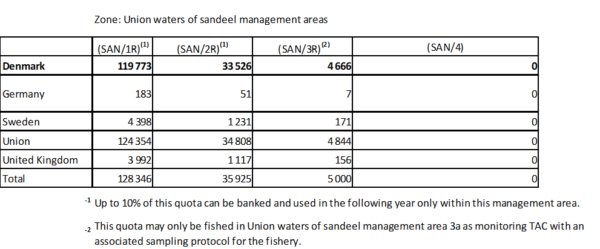
Kvoten for dette års tobis-sæson blev fastsat til 150.579 tons for det danske fiskeri. De faktiske landinger nåede dog ikke op på denne mængde, idet der blev landet 69.000 tons, hvilket svarer til ca. 46 % af den tildelte kvote, der blev udnyttet.
En væsentlig faktor i de reducerede landinger i denne sæson var lukningen af britiske farvande. Disse farvande har traditionelt været vigtige for danske fiskere, da de giver adgang til vigtige fiskepladser. Begrænsningen har gjort det nødvendigt at udforske alternative fiskeriområder, hvilket kan have resulteret i de lavere fangstrater, der er observeret. I fremtiden vil fokus sandsynligvis skifte til at evaluere indvirkningen af de lavere landinger på forsyningskæden, herunder produktionen af fiskemel og tilgængeligheden af foder til akvakultur. Der forventes en formel diskussion i efteråret mellem EU og Storbritannien om sidstnævntes seneste handlinger vedrørende vilkårene i Brexit-aftalen. Vi forventer yderligere udvikling fra disse diskussioner, og hvordan det vil påvirke det fremtidige fiskeri.
Tobisovervågning – tobislandinger i 2024
2024.4.18
Tobissæsonen startede i år den 1. april, og de vilkår, der gælder for tobisfiskeriet i 2024, kan læses i bekendtgørelse om straksregulering nr. 15 på Fiskeristyrelsens hjemmeside klik her.
ICES’ rådgivning for fangst af tobis i hvert forvaltningsområde i 2024 kan læses og downloades fra ICES’ hjemmeside klik her.
Tobisskrabeturen, som DTU Aqua gennemførte i november-december 2023, viste en relativt ringe tilførsel af yngel til tobisbestanden. Den samlede danske tobis-kvote i 2024 er 158.096, og det svarer til -12,96% i fiskerimuligheder sammenlignet med sidste år.
Tobis Landet i uge 26 – 10.653 tons
I alt (14-26) = 75.137 tons
Seneste kommentarer