
The Danish Industry
Blue Value Chain
Danish fishmeal and fish oil are characterized by traceability, sustainability, and a low climate footprint. With a high protein content and rich in essential amino acids and omega-3 fatty acids, these products are key ingredients in the aquaculture sector. Fishmeal and fish oil connect the blue value chain from catch and side-streams to feed and onwards to the production of nutritious food.
The challenge
The global population is anticipated to reach 9.3 billion by 2050, necessitating substantial increases in food and feed production (FAO 2024). Aligned with the sustainable development goal of zero hunger, there’s a critical need to ensure universal access to nutritious food. Striking a balance between meeting this demand, preserving biodiversity, and fostering diversity in the food sector is imperative. According to FAO, the Food and Agriculture Organization of the United Nations, this additional supply will have to come from aquaculture. Meeting the future demand for food from aquaculture will largely depend on the availability of quality feeds in the requisite quantities.
Fishmeal and fish oil have served as the foundational ingredients that have traditionally supported the rapid rise of aquaculture, owing to their exceptional nutritional value which are considered the gold standard against which other ingredients are measured. Over the past 25 years, the production rates for both ingredients have remained constant, indicating a stable supply.
Aquaculture is an efficient and optimal use of both plant and marine proteins
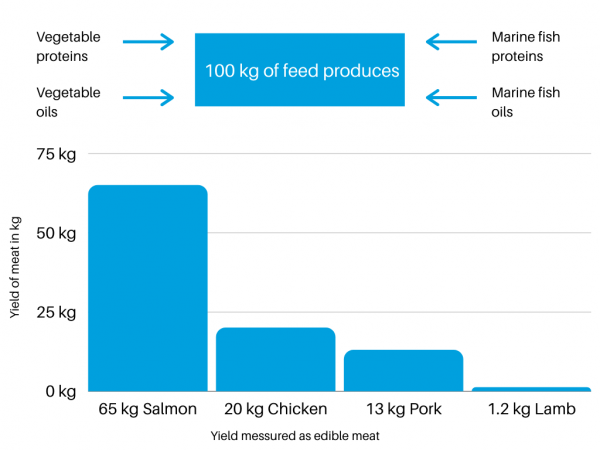
Aquaculture represents one of the most efficient ways to convert both marine and plant-based feed ingredients into high-quality edible protein. As shown in the comparison, 100 kg of feed produces up to 65 kg of salmon, significantly more than chicken (20 kg), pork (13 kg), or lamb (1.2 kg). This high feed conversion efficiency makes salmon farming—and aquaculture in general—a sustainable and optimal use of valuable resources such as marine fish proteins, fish oils, and vegetable ingredients, helping to meet growing global demand for protein with a lower environmental footprint.